


23 Aug Independent Restaurant Versus Franchise Purchase
A restaurant purchase can look attractive on paper for very different reasons. One buyer sees a recognizable franchise name and built-in operating systems. Another sees an established independent restaurant with loyal regulars, a strong neighborhood location, and room to improve margins. The independent restaurant versus franchise purchase decision is not simply a choice between freedom and security. It is a decision about capital, operating fit, control, and the kind of asset you are actually acquiring.
For buyers in Arizona, the right answer often comes down to the existing business fundamentals: lease terms, labor model, sales mix, competition, owner dependence, and the reality behind the stated cash flow. A familiar brand does not correct a weak location, and a local concept does not become a bad purchase just because it lacks national name recognition.
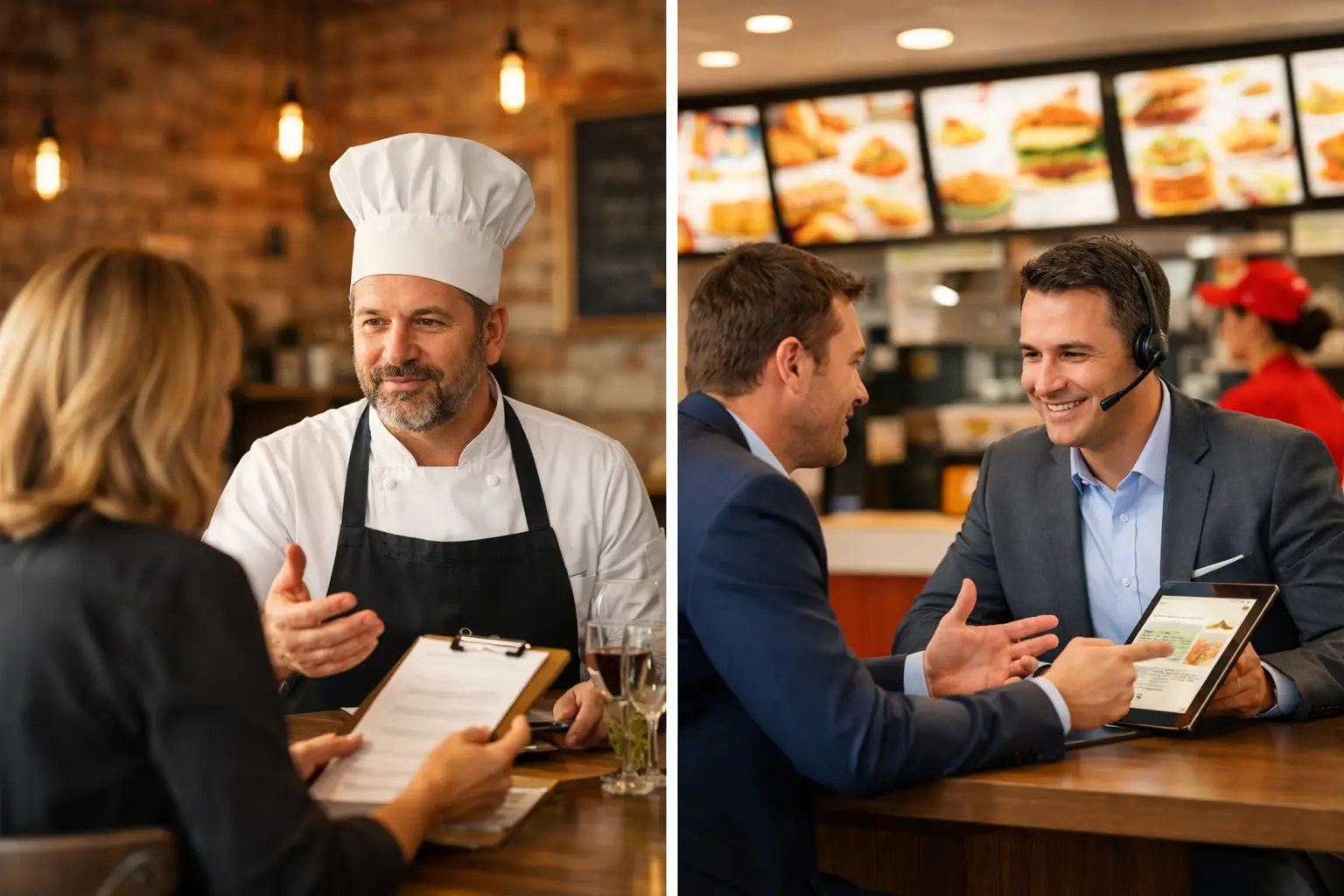
Independent Restaurant Versus Franchise Purchase: The Core Difference
An independent restaurant is usually a business built around its own name, menu, customer base, operating history, and local reputation. When you buy it, you are typically acquiring the business assets, goodwill, leasehold interest, equipment, recipes or intellectual property where applicable, and the opportunity to continue or reshape the concept.
A franchise purchase involves a licensed brand and a formal relationship with the franchisor. Whether buying an existing unit or developing a new location, the buyer operates under a franchise agreement that sets standards for branding, menu, suppliers, training, marketing, technology, and reporting. The franchise system can reduce certain startup decisions, but it also limits the buyer’s latitude to make changes.
Neither structure is automatically safer. The more useful question is whether the business model matches your ability to operate it and your return expectations.
What You Are Paying For
With an independent acquisition, the purchase price should be supported by the restaurant’s verified cash flow, the value of its furniture, fixtures, equipment, inventory, lease position, and transferable goodwill. A well-run neighborhood restaurant may command meaningful value because it has an established customer following and experienced staff. But that goodwill needs to be tested. If guests come primarily because the current owner is the public face of the restaurant, a transition may affect sales.
A franchise unit may carry value from its established brand recognition, operating system, and customer awareness. Buyers also need to account for continuing obligations that are not always visible in the asking price. These can include royalty fees, brand marketing contributions, technology fees, required remodels, transfer fees, training costs, and mandated equipment replacements.
The purchase price is only one part of the capital requirement. A buyer should also calculate working capital for payroll, food and beverage inventory, utility deposits, repairs, licensing, opening expenses, and a realistic cash reserve. Restaurants rarely fail because an owner did not have a menu idea. They fail because sales soften, costs rise, or a required repair arrives before the business has adequate reserves.
The value of a proven location
An existing restaurant in a productive trade area can be valuable regardless of whether it is independent or franchised. In Phoenix Metro, a location with dependable lunch traffic, convenient access, strong visibility, and favorable parking can be a major part of the investment case. So can a lease with remaining term, usable renewal options, and rent that makes sense relative to sales.
Review the lease before becoming attached to the concept. Confirm assignment rights, landlord approval requirements, rent escalations, common area charges, personal guarantee exposure, permitted use, patio rights, and any required upgrades. A restaurant can have strong sales and still be a poor acquisition if the lease cannot support the economics over the next several years.
Control Has Financial Consequences
An independent restaurant gives an owner more control over pricing, menu changes, vendors, promotions, service style, hours, and brand direction. That flexibility can be especially valuable when food costs move, customer tastes change, or a neighborhood presents a specific opportunity. An operator may add catering, adjust the bar program, reduce a low-margin menu category, or reposition the concept without seeking corporate approval.
That control also means the buyer is responsible for every operating decision. There is no franchisor-approved playbook to rely on when hiring, training, building a marketing calendar, negotiating with vendors, or introducing a new point-of-sale process. First-time owners should be realistic about whether they want to create and manage those systems.
Franchise ownership trades flexibility for consistency. The menu, design standards, approved suppliers, local store marketing rules, and operating procedures may be prescribed. For an owner who values structure and wants to execute a known model, this can be beneficial. For an experienced restaurateur with a clear point of view on product, purchasing, and guest experience, the limitations can become expensive and frustrating.
Assess the Brand, Not Just the Franchise Label
A franchise brand is not a substitute for due diligence. Buyers should study same-store sales trends at the target unit, local unit performance where available, closures in comparable markets, required capital improvements, and the actual support the franchisor provides after closing. A well-known name may bring customer awareness, but awareness alone does not guarantee sales growth or acceptable labor and food-cost percentages.
Pay close attention to the remaining franchise term. If a unit has a short period left on its agreement, the buyer needs clarity on renewal conditions, renewal fees, remodel requirements, and whether the franchisor can require a substantial capital investment. Franchise approval is another key condition. The seller may accept an offer, but the transaction generally cannot close until the franchisor approves the buyer and the transfer.
Independent concepts require a different kind of brand review. Look at online reputation patterns, repeat business, catering relationships, social media activity, community presence, and the condition of the physical space. Ask whether the name has value apart from the seller. A long-running local restaurant may have stronger customer loyalty than a newer franchise unit, but that loyalty needs to be supported by sales records rather than assumptions.
Financing and Deal Structure
Both independent and franchise acquisitions can be financed, but lender requirements and deal structure vary. Lenders commonly focus on historical cash flow, buyer liquidity, credit profile, lease term, industry experience, seller financial statements, tax returns, and the quality of the assets being purchased.
An established franchise can be easier for some lenders to evaluate because its brand standards and operating history are more standardized. That does not remove the need for adequate debt-service coverage. A franchisee’s royalty and marketing payments reduce the cash available to service acquisition debt, so buyers should model them as fixed operating obligations.
Independent restaurant deals often require more attention to normalized earnings. The seller may have discretionary expenses, family payroll, or one-time costs that need careful review. A buyer should not accept an add-back merely because it appears on a broker-prepared summary. Verify it against tax returns, profit and loss statements, bank deposits, payroll reports, sales-tax filings, merchant processing data, and vendor invoices.
Seller financing can be useful in either type of acquisition. It may help bridge a valuation gap and keeps the seller invested in a successful transition. Still, the promissory note, security interest, payment schedule, and any offset rights should be documented carefully. A deal structure that leaves the business short of operating capital is not buyer-friendly, even if it produces a lower down payment.
Operational Fit Matters More Than Buyer Enthusiasm
The best acquisition is one the buyer can operate, improve, and hold through ordinary volatility. An independent full-service restaurant with a liquor program may be ideal for an experienced operator but demanding for an investor without a strong general manager. A franchise quick-service concept may offer standardized procedures but still require disciplined scheduling, quality control, local marketing, and daily oversight.
Before making an offer, spend time in the business at different dayparts. Watch ticket times, table turns, order accuracy, staffing levels, customer traffic, and manager involvement. Review the menu mix and determine which products drive contribution margin, not just sales volume. In a bar-focused business, examine liquor cost controls, entertainment agreements, security, and any seasonal sales patterns.
Employee retention deserves attention as well. Determine which key people are likely to remain after a sale, what compensation commitments exist, and whether the seller’s role includes responsibilities no one else currently performs. A turnkey restaurant is only turnkey if the operating team, systems, and location can function after ownership changes.
How to Make the Choice
Choose a franchise when you value an established operating framework, are comfortable with recurring brand fees and required standards, and believe the specific unit has sound economics after those costs. Choose an independent restaurant when you want control over the concept, see verified local goodwill, and have the operational capability to protect and build the business without franchisor support.
Arizona Restaurant Sales can help buyers compare restaurant opportunities on the factors that matter in a transaction: cash flow quality, lease strength, equipment condition, transfer requirements, market position, and realistic working-capital needs. The goal is not to sell a buyer on one path. It is to identify an acquisition that fits the buyer’s experience, financial capacity, and operating plan.
A recognizable sign outside the building and a beloved local name can both have real value. The better purchase is the one whose financial records hold up, whose lease gives you time to operate, and whose daily demands you are prepared to meet after the keys change hands.