

22 Sep How to Assess Commercial Kitchen Equipment Before Buying
A restaurant can look turnkey from the dining room while the kitchen is carrying six figures in deferred replacement costs. To assess commercial kitchen equipment properly, a buyer or seller needs to look beyond the make, model, and stainless-steel appearance. The real questions are whether each asset performs, meets the operation’s current needs, can transfer cleanly, and has enough useful life left to support the deal.
For a buyer, equipment condition affects the offer price, working capital needs, lender discussions, and the first months of operations. For a seller, a documented, well-maintained kitchen removes uncertainty that can otherwise become a negotiating point. This review is especially relevant in Arizona, where refrigeration and ice equipment work harder through long periods of extreme heat.
Start With the Kitchen’s Operating Reality
Equipment has value only when it supports the concept, volume, and service style being purchased. A 10-burner range may be an asset for a high-volume full-service restaurant, but it may be oversized, inefficient, and expensive to maintain for a limited-menu cafe. Similarly, a kitchen designed for dine-in service may not have the cold storage, packaging space, or production flow needed for a delivery-heavy concept.
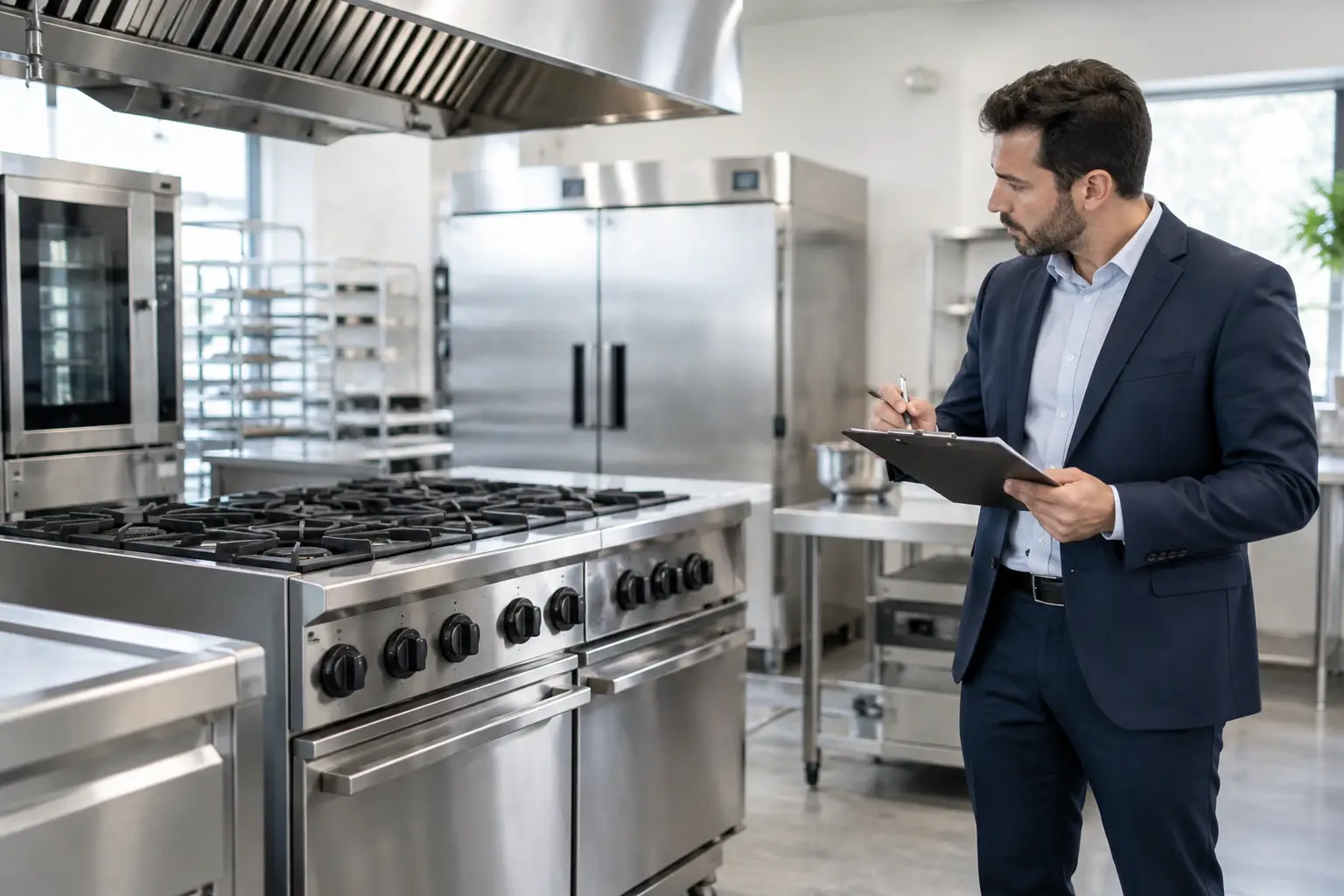
Walk the kitchen during an active service if possible. Watch the line, prep areas, dish station, storage, and bar support areas. Identify equipment that sits unused, creates bottlenecks, or forces staff into inefficient movement. Ask the operator which pieces are essential to revenue, which are backup units, and which have been bypassed because they no longer work reliably.
A sound assessment also compares the equipment package with the buyer’s intended menu. A buyer planning to add pizza, baking, smoking, or a larger brunch program should not assume the existing hood, gas capacity, electrical service, or floor plan can support it. The cost of a new oven is often far lower than the cost of modifying ventilation, utility connections, fire suppression, and permits around it.
How to Assess Commercial Kitchen Equipment by Category
A practical review is not a quick inventory. It is an asset-by-asset inspection tied to condition, age, capacity, maintenance history, and replacement exposure.
Cooking Equipment and Ventilation
Inspect ranges, ovens, fryers, griddles, charbroilers, steamers, combi ovens, and specialty equipment while they are operating. Check whether burners ignite consistently, thermostats hold temperature, doors and hinges seal correctly, pilot lights function, and controls are intact. Excessive grease buildup, warped cooking surfaces, improvised repairs, or uneven heating are signs that a unit may be near the end of its useful life.
The hood system deserves equal attention. Verify that exhaust hoods cover the cooking line adequately and that the hood, filters, ductwork, makeup air system, and fire suppression equipment have been professionally serviced. A hood that is undersized, poorly maintained, or not aligned with the current cooking equipment can become a costly correction. Do not rely on a seller’s statement that it has always passed inspection. Request service records and confirm requirements with the applicable local authority before closing.
Refrigeration, Freezers, and Ice Machines
Refrigeration failures create immediate operating risk. Inspect walk-in coolers and freezers, reach-ins, prep tables, undercounter units, beer coolers, and ice machines for temperature consistency, door gasket condition, drainage issues, compressor noise, ice buildup, and visible corrosion.
Ask for temperature logs if they are maintained and review repair invoices from the last 12 to 24 months. A unit can be cold during a brief walkthrough and still have a compressor that cycles excessively or struggles during peak afternoon heat. In Phoenix-area transactions, outdoor condensers, rooftop components, and poorly ventilated equipment rooms deserve particular scrutiny.
Ice machines should be checked for scale, water filtration, sanitation records, and production capacity. A replacement ice machine may not be the largest capital item in a deal, but an undersized or unreliable unit can disrupt beverage sales immediately.
Dishwashing, Prep, and Smallwares
Dish machines should be observed through a complete cycle. Confirm wash and rinse temperatures, chemical dispensing, drainage, booster heater performance, and water pressure. A failed high-temperature dishwasher or booster heater can interrupt service and require fast replacement.
Prep equipment includes mixers, slicers, food processors, vacuum sealers, warming cabinets, proofers, and specialty units. Test what can be tested. A commercial mixer with a worn transmission, a slicer missing safety guards, or a broken holding cabinet may have modest individual value but still create a material opening expense when several items need replacement at once.
Smallwares should be included in an inventory, but they should not be valued like core installed equipment. Count high-value items such as quality cookware, sheet pans, hotel pans, storage racks, and bar tools, then distinguish usable operating inventory from worn or mismatched surplus.
Verify Ownership Before Assigning Value
One of the most common transaction mistakes is treating every visible item as part of the sale. Equipment may be owned free and clear, financed, leased, provided by a beverage distributor, or owned by the landlord. A POS system, ice machine, soda system, coffee brewer, dishwasher, or security system may have a separate agreement that does not automatically transfer to the buyer.
Request a detailed equipment schedule that lists each major asset, manufacturer, model number, serial number, approximate age, condition, and ownership status. The schedule should clearly identify exclusions. If a seller says equipment is owned, confirm whether any lender lien, equipment lease, or vendor obligation remains.
This work is not paperwork for its own sake. An asset that cannot transfer, or that requires a lease payoff, changes the economics of the transaction. It can also affect what is included in the asset purchase agreement and how the purchase price is allocated.
Estimate Value Without Confusing Cost With Worth
Replacement cost is useful context, but it is not market value. Commercial equipment depreciates quickly, and used equipment value depends heavily on brand, age, condition, local demand, remaining service life, and the cost to remove and reinstall it. Installed equipment with no practical resale market may still be critical to operating the restaurant, yet it should not be priced as if it were new.
A sensible approach separates equipment into three groups: revenue-critical assets that must work on day one, serviceable assets with a reasonable remaining life, and assets likely to require near-term replacement. Build a replacement reserve for the third group rather than assuming the asking price already accounts for it.
For larger or unusual equipment packages, a qualified commercial kitchen technician can provide a condition report. This expense is often justified when the kitchen includes a walk-in, extensive ventilation, a bakery line, a production kitchen, or expensive specialty equipment. General building inspectors may identify broad concerns, but restaurant-specific equipment requires restaurant-specific expertise.
Turn Findings Into a Better Deal Structure
The purpose of inspection is not to find reasons to walk away. It is to price risk accurately and decide which party should carry it. If several major items are near failure, a buyer may seek a price adjustment, seller repair, repair credit, or holdback tied to documented completion. The right answer depends on the transaction timeline, seller motivation, financing, and how easily the equipment can be replaced.
Sellers should avoid cosmetic fixes that do not address the real issue. A clean kitchen, current service records, and a transparent equipment schedule are more persuasive than an unsupported claim that everything works. If a fryer, compressor, or hood component is known to need attention, addressing it before marketing may protect the asking price and reduce late-stage renegotiation.
Arizona Restaurant Sales regularly sees buyers respond well to businesses that present operational facts clearly. A complete equipment package, realistic condition disclosure, and clean transfer documentation help qualified buyers focus on the opportunity instead of guessing at hidden capital needs.
Before committing to a purchase or taking a restaurant to market, treat the kitchen as both an operating system and a collection of assets with different lives. The strongest deals are not those with the newest equipment on paper. They are the ones where both sides understand what will be needed on day one, what can wait, and what the price should reflect.